Case study 01 · Orbgnost
An ISO 14001 environmental compliance platform, built end to end and live
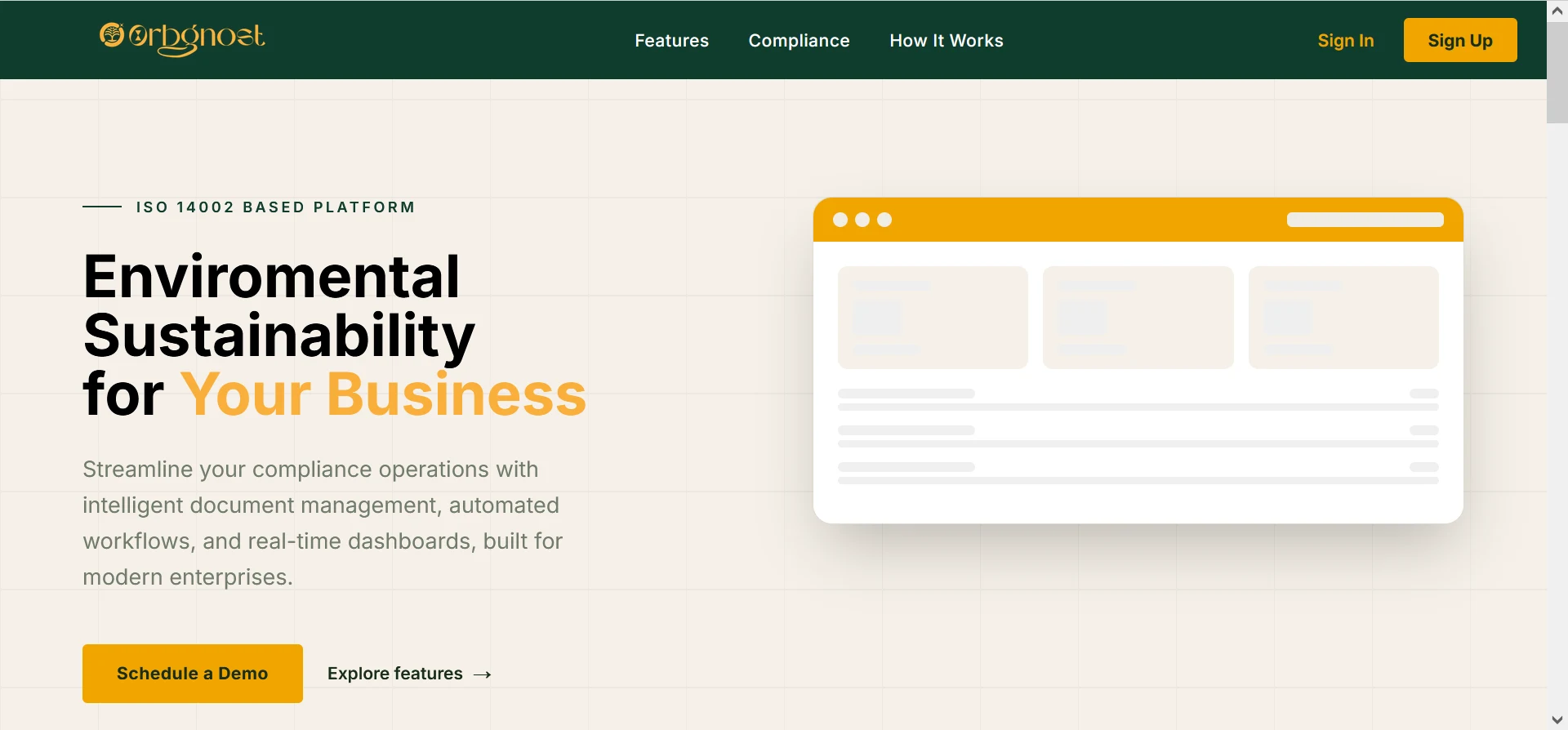
Orbgnost puts a company's whole ISO 14001 environmental management system in one place — documents, legal register, incidents, audits, training and tasks — with every company's data kept separate on one shared platform.
- Role
- Full stack developer — joined as a freelancer, hired full-time in April 2026
- Timeline
- January 2026 – present
- Stack
- Next.js
- TypeScript
- Node.js
- Express
- Prisma
- PostgreSQL
- CI/CD
At a glance
Compliance modules in one place, from aspects and impacts to the legal register
Scoped roles — admin, sub-admin, staff and auditor — plus a platform super admin
Shared platform, with each company's data kept fully separate
In production at orbgnost.com since 2026
The problem
ISO 14001 asks a company to prove, at any audit, that it is managing its environmental aspects, its legal obligations, its incidents, its training and the actions that follow from all of them. In most teams that evidence lives in spreadsheets, shared folders and inboxes — so the night before an audit becomes a scramble to find it.
Orbgnost's job is to make that evidence a by-product of everyday work: log the incident, assign the task, file the document, and the compliance picture updates itself.
Approach
I built the platform end to end — the screens people use and the database behind them — with Next.js on the front and a Node.js and Express API on Prisma and PostgreSQL.
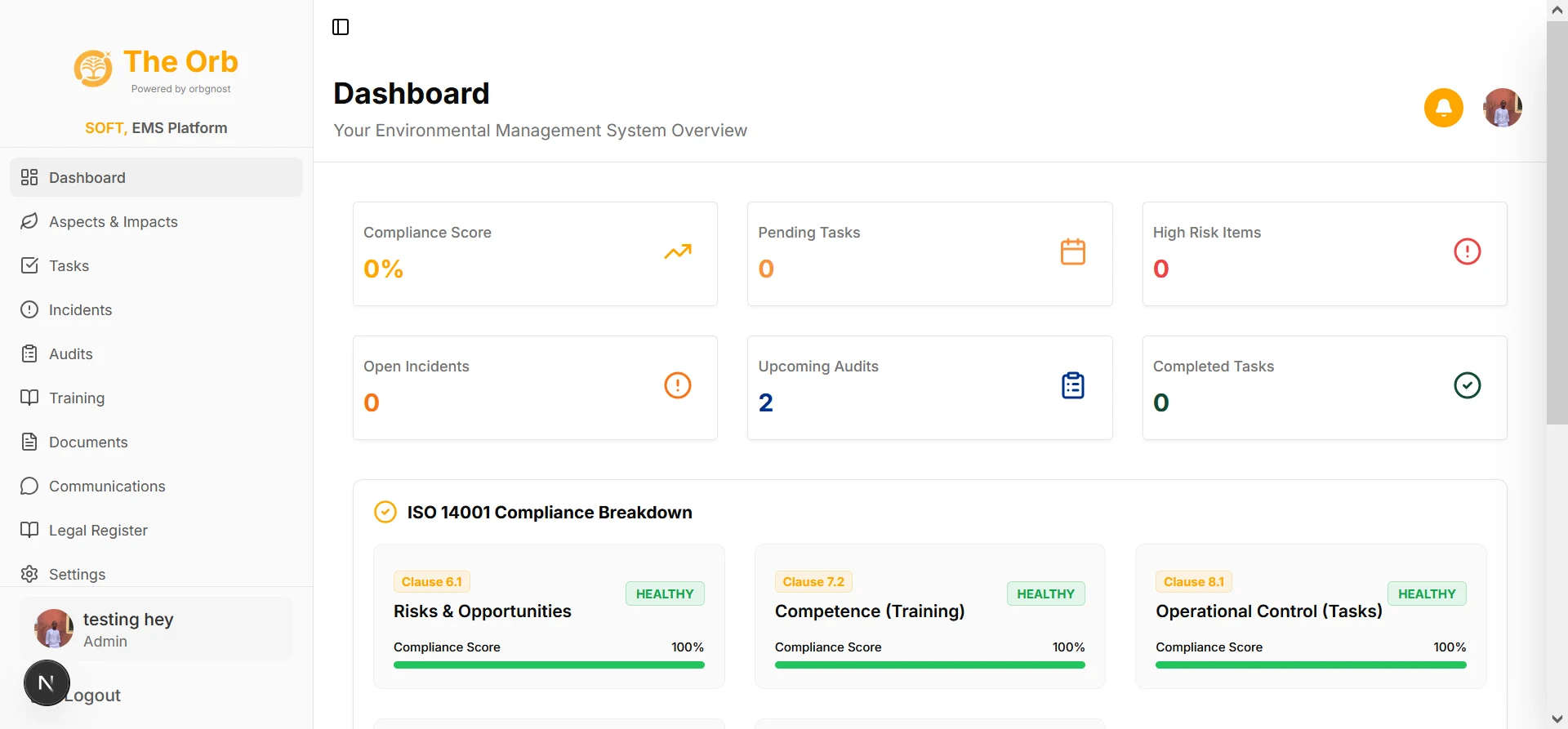
- One place for the whole system. Aspects and impacts, tasks, incidents, audits, staff training, documents, communications and the legal register each have their own module, all feeding one dashboard.
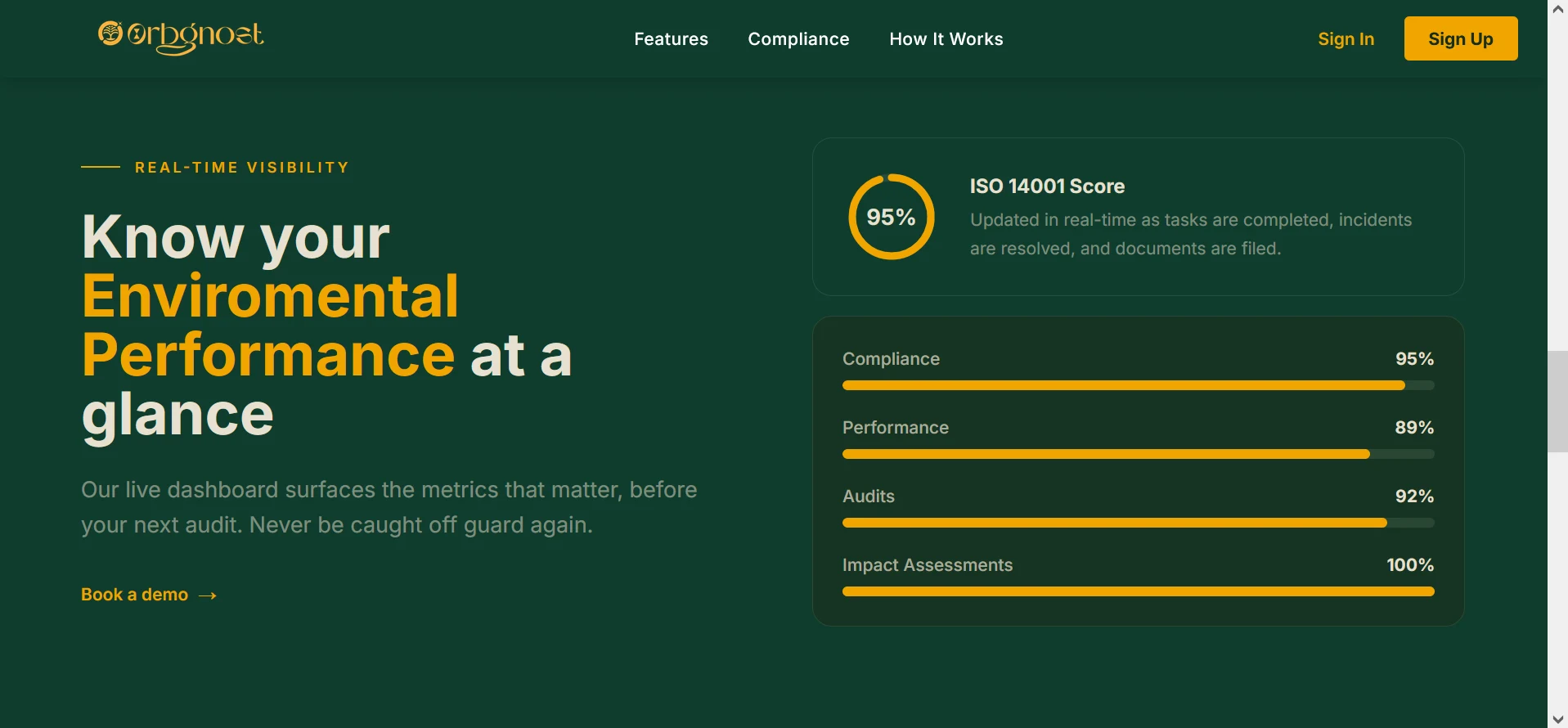
- Compliance you can see. The dashboard scores the system clause by clause against ISO 14001 — risks and opportunities (6.1), competence and training (7.2), operational control (8.1) — and moves as tasks are completed, incidents resolved and documents filed.
- Many companies, one platform. Each organisation's data is kept fully separate, behind secure sign-in and role-based access: admins, sub-admins, staff and auditors only see and do what their role allows, and a super admin manages organisations, users and audit logs across the platform.
- Shipping safely. Approval flows, dashboards and reports went out behind a CI/CD pipeline, so new features reach users quickly without breaking what's there.
- Next.js appDashboards, modules and approval flows, per role
- Express APINode.js · JWT sign-in · role-based access
- Tenant scopeEvery query filtered to one company
- Prisma + PostgreSQLDocuments, incidents, audits, training, tasks
Results
Orbgnost is live at orbgnost.com and in use by real companies. It started as a freelance build in January 2026; in April 2026 the team hired me full-time to keep building it.
Let’s talk
Got something worth building?
Tell me what you’re working on — a role, a product, or a feature that’s stuck. I read every message myself.